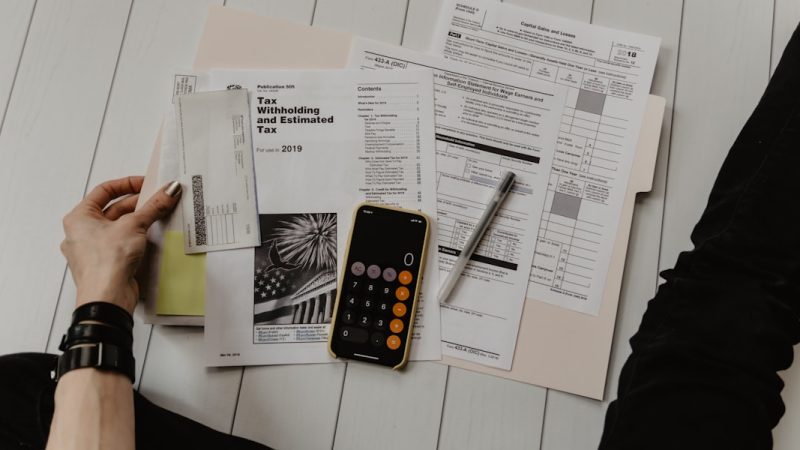
The TSE POS system obligation has applied since 2020 to every business operating an electronic cash register – and car dealerships are no exception. Whether it is the cash sale of a used car, a deposit on a new car or the workshop register for repairs and inspections: anyone operating an electronic register needs a certified Technical Security Device (TSE). In this guide, you will learn everything about the legal foundations of the Cash Register Security Regulation, the specific requirements for car dealers and how to set up your POS system in a legally compliant manner.
At a glance: The TSE POS system obligation applies to every electronic cash register in Germany – including car dealerships. Anyone operating without a certified TSE risks fines of up to 25,000 euros and problems during the next cash register inspection. With the AutoPult POS system, you automatically meet all requirements.
What Is the Cash Register Security Regulation (KassenSichV)?
The Cash Register Security Regulation (KassenSichV) is a regulation of the German Federal Ministry of Finance that came into effect on January 1, 2020. It specifies the requirements from the Cash Register Act (Act on the Protection Against Manipulation of Digital Basic Records) and mandates that electronic recording systems must be equipped with a certified technical security device.
The objective: every single cash transaction is to be recorded in a tamper-proof manner. Subsequent changes or deletions of revenues – a common problem with older POS systems – are technically prevented by the TSE. This gives the tax office certainty that the recorded revenues are complete and accurate.
Legal Foundations at a Glance
- § 146a AO – Regulatory provision for the recording of cash receipts and expenditures by means of electronic recording systems
- KassenSichV – Regulation determining the technical requirements for electronic recording and security systems in business transactions
- DSFinV-K – Digital interface of the tax administration for POS systems (standardized export format)
- Cash register inspection (§ 146b AO) – Unannounced audit of cash register data by the tax office
- Receipt issuance obligation (§ 146a para. 2 AO) – Obligation to issue a receipt for every business transaction
What Is a TSE? – Technical Security Device Explained
The abbreviation TSE stands for Technical Security Device (Technische Sicherheitseinrichtung). It is a module certified by the German Federal Office for Information Security (BSI) that cryptographically signs and stores every single register transaction in a tamper-proof manner.
A TSE consists of three components:
Security Module (CSP)
The cryptographic core of the TSE. This is where the digital signatures are generated that secure each transaction. The security module is BSI-certified and protected against manipulation.
Storage Medium
All signed transaction data is stored in an audit-proof manner – either locally on the TSE module or in the cloud. The data must remain available for the duration of the statutory retention period.
Standardized Digital Interface
The standardized interface enables the tax office to access the stored data – particularly during a cash register inspection or tax audit in DSFinV-K format.
Who Needs a TSE? – The TSE POS System Obligation in Detail
The TSE POS system obligation applies to every business that uses an electronic recording system (i.e. an electronic cash register, a PC-based POS system or a tablet register). This includes:
- Electronic cash registers – classic shop registers with electronic recording
- PC-based POS systems – software registers on computers or laptops
- Tablet and cloud registers – modern POS solutions on iPads or Android tablets
- Scales with register functionality – provided they record revenues
TSE Obligation in the Car Dealership: Special Requirements for Car Dealers
The car dealership is a special case because various register areas come together here. Unlike retail, where a single register stands at the counter, the typical car dealership has multiple points where cash flows or electronic transactions are processed.
Typical Register Areas in the Car Dealership
| Register Area | Typical Transactions | TSE-Relevant? |
|---|---|---|
| Vehicle sales (new & used) | Cash sales, deposits, final payments | Yes, if electronically recorded |
| Workshop register | Repair invoices, inspections, vehicle inspection fees, parts sales | Yes |
| Parts and accessories counter | Spare parts, accessories, deposits | Yes |
| Car wash / self-service wash bay | Wash tokens, cash receipts | Yes, if electronic |
| Fuel station (for dealerships with own pumps) | Fuel sales | Yes |
Each of these areas where an electronic recording system is in use must be equipped with its own TSE – or all registers must access a shared TSE through a central system.
Cash Sales and Deposits in Vehicle Trading
In vehicle trading, large cash amounts frequently occur. A used car paid for with 15,000 euros in cash, a 5,000 euro deposit on a new car – these amounts must be recorded seamlessly and in a tamper-proof manner. The tax office pays special attention to industries with a high proportion of cash, and the car trade is definitely among them.
Furthermore, the cash threshold of 10,000 euros under the Money Laundering Act (GwG) has been in effect since 2020. For cash payments above this amount, additional identification obligations apply. TSE-compliant recording of every cash payment is therefore relevant not only for tax purposes but also under money laundering law.
The Workshop Register
In the workshop, numerous transactions are processed daily: oil changes, brake service, tire changes, diagnostic services and much more. Many customers pay on-site in cash or by card. Each of these transactions must go through the TSE-secured POS system and be documented with a receipt.
DSFinV-K: The Standardized Export Format for Register Data
The DSFinV-K (Digital Interface of the Tax Administration for POS Systems) is the standardized data format in which register data must be exported for the tax office. During a cash register inspection or tax audit, the auditor requests the data in DSFinV-K format – your POS system must be able to deliver these at the push of a button.
The DSFinV-K export includes, among other things:
- Individual transaction data – each register transaction with timestamp, amount and TSE signature
- Master data – information about the company, register locations and users
- Register balances – daily closings, register discrepancies and count protocols
- Payment methods – breakdown by cash, debit card, credit card, bank transfer, etc.
- TSE data – signatures, signature counter and TSE serial number
Tip: Test the DSFinV-K export of your POS system before an audit. Many businesses only discover during a cash register inspection that the export is faulty – and then it is too late. The AutoPult POS system generates the DSFinV-K export automatically and error-free.
Receipt Issuance Obligation: Every Customer Gets a Receipt
Since January 1, 2020, the receipt issuance obligation under § 146a para. 2 AO has applied in Germany. This means: for every business transaction, a receipt must be handed to or made available to the customer – regardless of whether the customer wants the receipt or not.
What Must Appear on the Receipt?
The receipt must contain at least the following information:
- Full name and address of the service-providing company
- Date and time of the business transaction
- Quantity and type of goods delivered or services provided
- Transaction number
- Amount and tax amount with indication of the tax rate
- TSE serial number
- Signature counter and verification value of the TSE
- Start and end of the transaction
In the car dealership, this means: even for a workshop invoice, a parts sale or a deposit on a vehicle, a TSE-compliant receipt must be created and offered to the customer. The receipt can be issued as a paper receipt or as an electronic receipt (e.g. via email).
Cloud TSE vs. Hardware TSE: Which Solution Suits the Car Dealership?
When choosing a TSE, car dealerships have two fundamental options: a hardware TSE or a cloud TSE. Both variants are BSI-certified and legally equivalent – but differ considerably in handling.
| Criterion | Hardware TSE | Cloud TSE |
|---|---|---|
| Form | USB stick, SD card or smart card | Server-based service (data center) |
| Installation | Physically connected to the register device | Software integration via API |
| Internet connection | Not required | Required (with offline buffer) |
| Multiple registers | Separate TSE needed per register | One cloud TSE for multiple registers possible |
| Maintenance | Hardware replacement in case of defect | Automatic updates by the provider |
| Cost | One-time approx. 100–300 € per device | Monthly fee from approx. 10–30 € per register |
| Certification period | Usually 5 years, then replacement | Ongoing renewal by the provider |
| Suitable for car dealerships | Good for few register locations | Ideal for multiple registers and locations |
For car dealerships with multiple register locations (sales, workshop, parts counter), a cloud TSE is generally recommended, as all registers can be secured centrally through one TSE instance. For smaller businesses with only one register, a hardware TSE can also make economic sense.
Certified TSE Providers
Only BSI-certified TSE solutions are legally compliant. Well-known providers include:
- Swissbit – hardware TSE (USB stick and SD card)
- Epson – hardware TSE (integrated in receipt printers)
- fiskaly – cloud TSE
- Deutsche Fiskal / Bundesdruckerei – cloud TSE
- Cryptovision – hardware TSE (smart card)
- A-Trust – cloud TSE
Penalties for Violating the TSE Obligation
Anyone who ignores the TSE POS system obligation risks severe consequences. The tax administration has various instruments to penalize violations:
- Administrative offense under § 379 AO: fine of up to 25,000 euros per violation
- Additional tax assessments by the tax office due to deficient cash management – potentially far more expensive than the fine itself
- Unannounced cash register inspection (§ 146b AO) – the auditor can appear at any time without notice
- In cases of serious deficiencies: rejection of the entire bookkeeping and estimation of tax bases
Particularly for car dealerships with high cash turnover, the risk of additional tax assessments is grave. If the tax office rejects the cash management and estimates revenues, this can quickly lead to back payments in the five- or six-figure range – plus interest and late payment surcharges.
TSE and DATEV: Achieving Successful Integration
Most car dealerships work with a tax advisor who uses DATEV as accounting software. For smooth collaboration, it is critical that the POS system can export TSE-secured data in a DATEV-compatible format.
What Matters for DATEV Integration
- DSFinV-K export – the standard format that DATEV can also process
- DATEV posting batch – automatic transfer of register data as posting entries
- Daily closings – Z-reports as structured data for accounting
- Receipt image linking – digital receipts directly linked to the postings
- Register reports – for monthly reconciliation with the tax advisor
Practical tip: With the AutoPult DATEV interface, you automatically transfer your register data to DATEV Unternehmen online. This saves your tax advisor time and you always have up-to-date figures – without manual transfers or error-prone CSV exports.
AutoPult POS System: TSE Compliance for Car Dealerships
The AutoPult POS system was developed specifically for the requirements of automotive retail and meets all statutory requirements of the Cash Register Security Regulation. As a cloud-based solution, it integrates a certified cloud TSE directly into the register process – without additional hardware, without complicated setup.
Advantages of the AutoPult POS System
Integrated Cloud TSE
BSI-certified cloud TSE integrated directly into the system. Every transaction is automatically signed – without you having to worry about hardware.
DSFinV-K at the Push of a Button
The legally required DSFinV-K export is generated automatically. During a cash register inspection, you deliver the data in seconds.
Automatic Receipt Issuance
Whether paper receipt or digital receipt via email – AutoPult creates TSE-compliant receipts with all mandatory information automatically.
DATEV Integration
Seamless connection to DATEV Unternehmen online. Register data, daily closings and receipts are automatically transferred.
Multiple Register Locations
Sales, workshop and parts counter – manage all registers centrally in one system with a shared cloud TSE.
Industry-Specific Features
Margin taxation, deposit management, vehicle sales receipts and cash book templates – everything developed specifically for the car trade.
Step by Step: Setting Up TSE in the Car Dealership
Switching to a TSE-compliant POS system does not have to be a major effort. Follow this guide to bring your car dealership into compliance:
Assessment
Identify all register locations in your business: sales, workshop, parts counter, car wash. List which systems are currently in use and whether they are already TSE-capable.
Choose POS System
Select a POS system with an integrated TSE that meets the industry-specific requirements of the car trade. Look for DSFinV-K export and DATEV interface capabilities.
Activate and Register TSE
Set up the TSE and register it with the responsible tax office. Registration is done electronically via the “Mein ELSTER” program or through your tax advisor.
Train Employees
Train your team on using the new system. Particularly important: explain the receipt issuance obligation and ensure that every transaction is correctly recorded.
Test DSFinV-K Export
Perform a test export in DSFinV-K format and check the data for completeness. This prepares you for a cash register inspection.
Create Procedural Documentation
Document your POS system, the TSE used, register processes and responsibilities in procedural documentation. This must be presented during a tax audit.
Procedural Documentation: This Is Often Forgotten
In addition to the TSE itself, the tax administration requires procedural documentation for your POS system. Many car dealerships forget this point – and then face difficulties during a tax audit.
The procedural documentation must describe, among other things:
- Which POS system is in use (manufacturer, version, license)
- Which TSE is used (type, serial number, certification number)
- How register closings are performed (daily closing, monthly closing)
- Who has access to the POS system (user authorizations)
- How cancellations and returns are handled
- How data backup is carried out (backup of TSE data)
- How the DSFinV-K export is created and archived
Frequently Asked Questions About the TSE Obligation in the Car Dealership
Does every register in the car dealership need its own TSE?
In principle, yes – every electronic recording system requires its own TSE. Exception: with cloud TSE solutions, multiple registers can be secured via a shared TSE instance. The AutoPult POS system uses exactly this principle and enables central TSE management for all register locations.
What happens in case of a TSE failure?
In the event of a temporary TSE failure (e.g. due to server problems with a cloud TSE or a hardware TSE defect), operations may continue. However, the downtime and the affected transactions must be documented. After the TSE is restored, the transactions must be retroactively signed. Important: the failure must be reported to the tax office without delay.
Does the TSE obligation also apply to card-only payments?
Yes. The TSE obligation applies to all transactions processed through an electronic recording system – regardless of the payment method. Even if a customer pays exclusively by debit or credit card, the transaction must be TSE-signed.
Must I register the TSE with the tax office?
Yes. Under § 146a para. 4 AO, you must report the TSE to the responsible tax office within one month of commissioning. The report contains the type of certified TSE, the serial number, the commissioning date and the location of use. Reporting is done via “Mein ELSTER.”
How long must TSE data be retained?
TSE data is subject to the regular tax retention period of 10 years. Since hardware TSE modules often have a certification period of only 5 years, you must export the data before expiry and archive it separately.
Can I retrofit my existing DMS with a TSE?
That depends on the respective DMS provider. Many Dealer Management Systems now offer TSE modules as extensions. Check whether your DMS supports a BSI-certified TSE and can handle DSFinV-K export. Alternatively, you can use a separate TSE-compliant POS system in parallel.
What does a TSE cost for a car dealership?
Hardware TSE modules cost a one-time fee of between 100 and 300 euros per register location. Cloud TSE solutions are billed monthly from approx. 10 to 30 euros per register. Additionally, there may be costs for the POS software and setup. With the AutoPult POS system, the cloud TSE is already included in the price.
Conclusion: Take the TSE Obligation Seriously and Act in Time
The TSE POS system obligation is not a theoretical requirement that the tax office will not bother to check. Cash register inspections are a reality, and car dealerships with a high proportion of cash transactions are under particular scrutiny. Anyone still operating without a certified TSE is taking a considerable financial risk – fines of up to 25,000 euros and the threat of additional tax assessments are no small matter.
The good news: with the right POS system, TSE compliance is no rocket science. The AutoPult POS system offers you a fully integrated cloud TSE, automatic receipt issuance, DSFinV-K export and seamless DATEV integration – all tailored specifically to the needs of car dealerships. So you can focus on your core business: selling cars and keeping customers happy.